
Recent Work
Photos from the job, grouped by the kind of work they show.
Heating and cooling work as it looks on the day: equipment set in attics, shops and side yards, cabinets opened for repair, and an old unit waiting to be hauled away.
Show only one kind of work
Choose a kind of work to see only its photos.
Repairs Inside the Cabinet
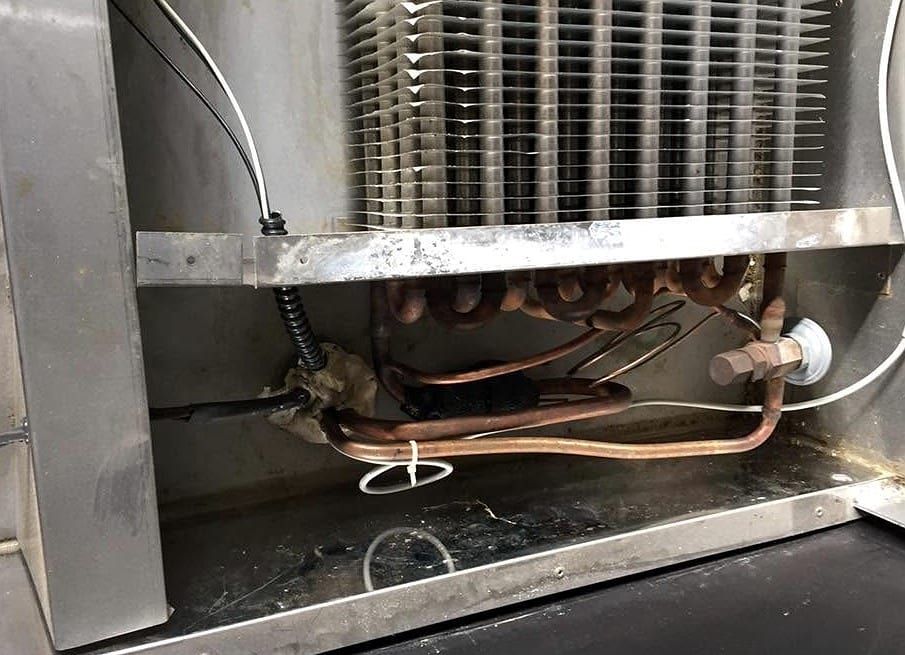
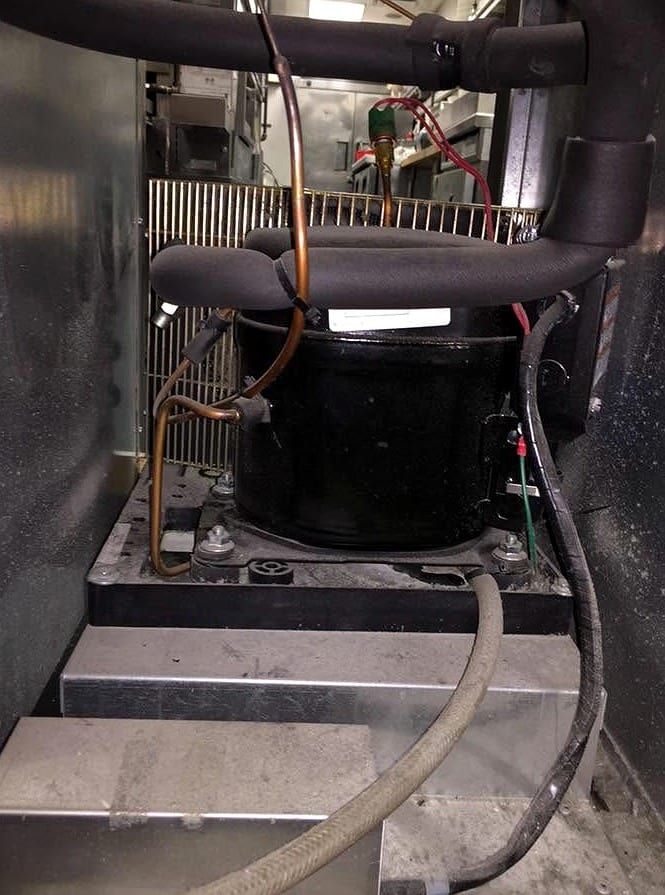
Most repairs happen behind an access panel, where the coil, the refrigerant piping, the compressor and the controls sit. A coil packed with dust or a leaking joint in the copper shows up in the readings long before it shows up as a hot house: a low temperature split, odd pressures, or oil staining at a fitting.
The fix is only as good as the diagnosis, so the cabinet is opened, the parts are measured, and the faulty one is replaced or repaired, then the system is run through a full cycle to confirm it.
Installations and Replacements
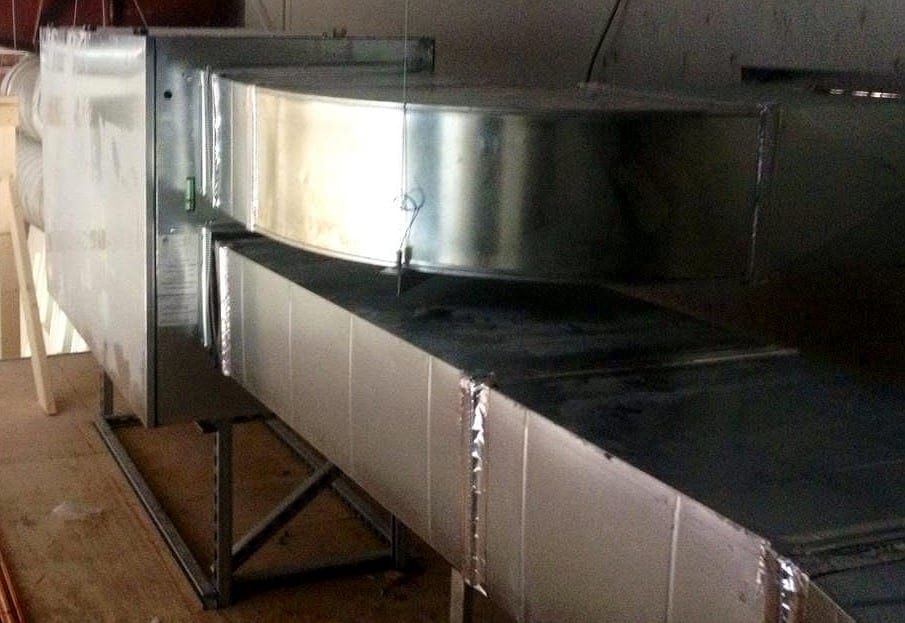
An installation is more than setting new equipment. In an attic it means a level stand for the air handler, a sheet-metal plenum built to fit, and every duct seam sealed with foil tape or mastic so the air reaches the rooms instead of the attic.
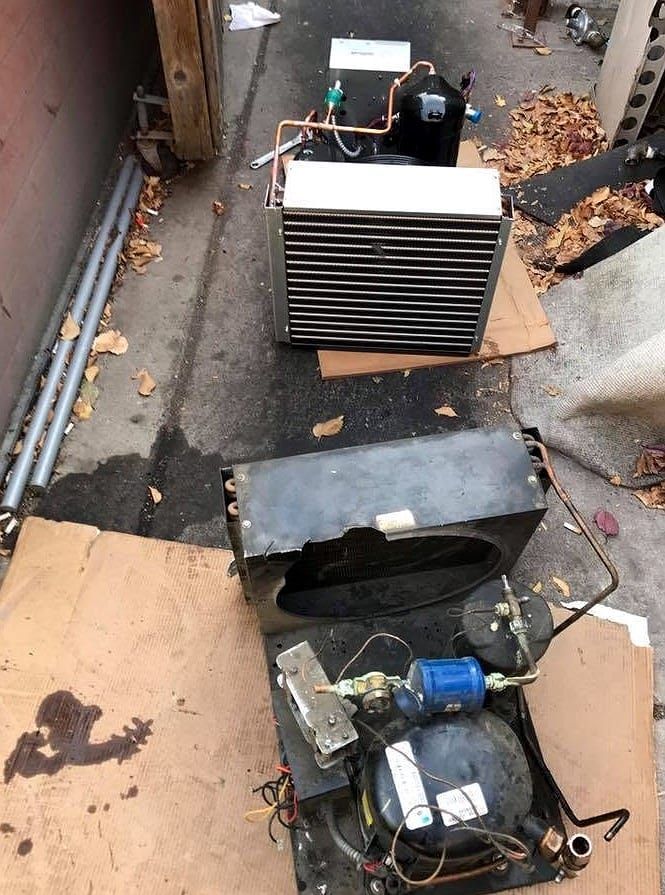
A replacement starts by taking out what has failed. The old condensing unit with its broken fan shroud comes out, and the new one goes in on a level base, with its lines and wiring connected and checked.
Maintenance
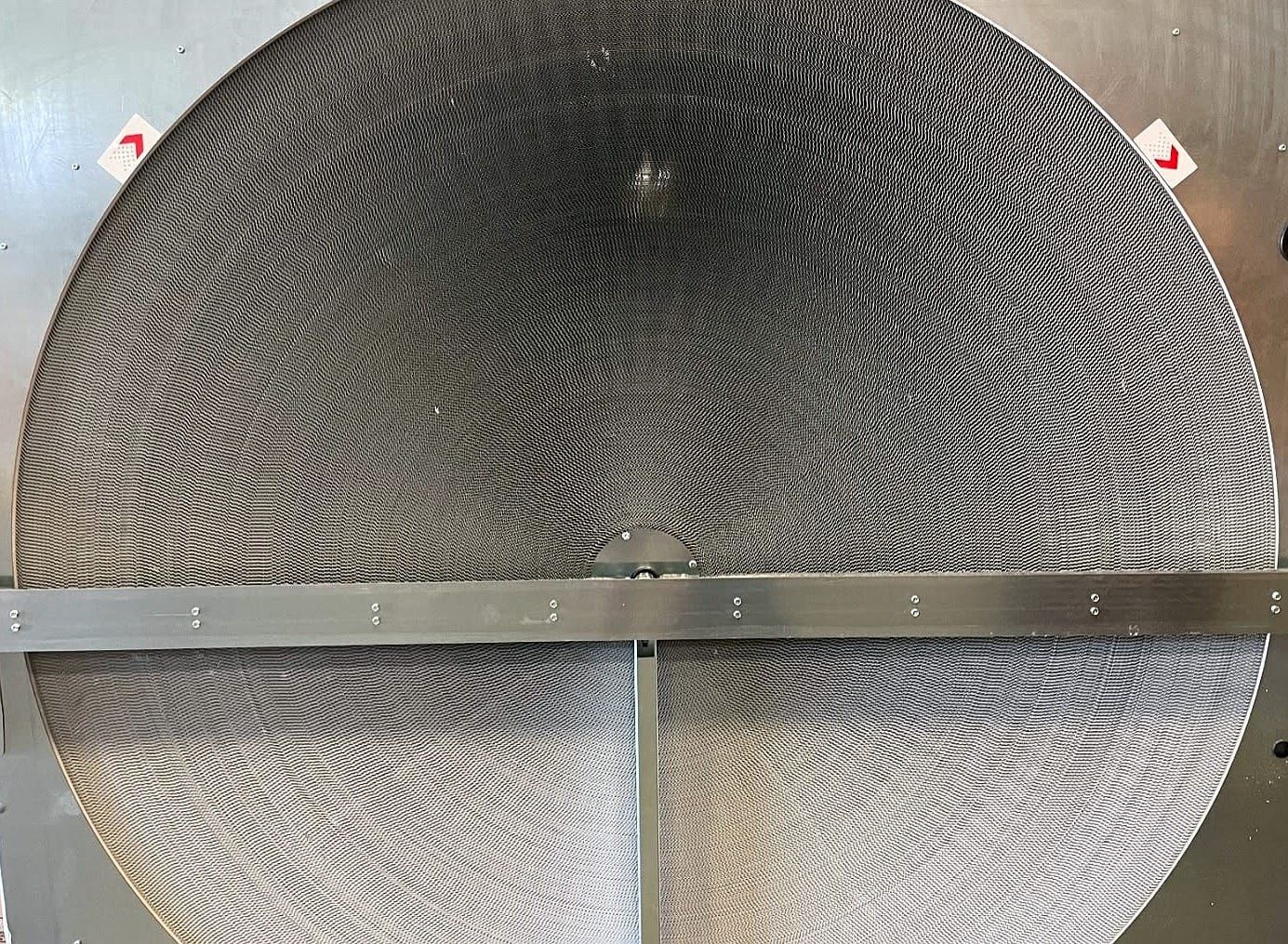
Larger commercial units carry parts most homes never see, such as an energy recovery wheel that trades heat between the outgoing and incoming air. Its honeycomb media has to stay clean and turning for the unit to work as designed, and checking it is part of servicing that kind of equipment.
At home, maintenance is the same idea on a smaller scale: clean coils, a clear drain, a free-spinning blower and tight electrical connections.
Heating
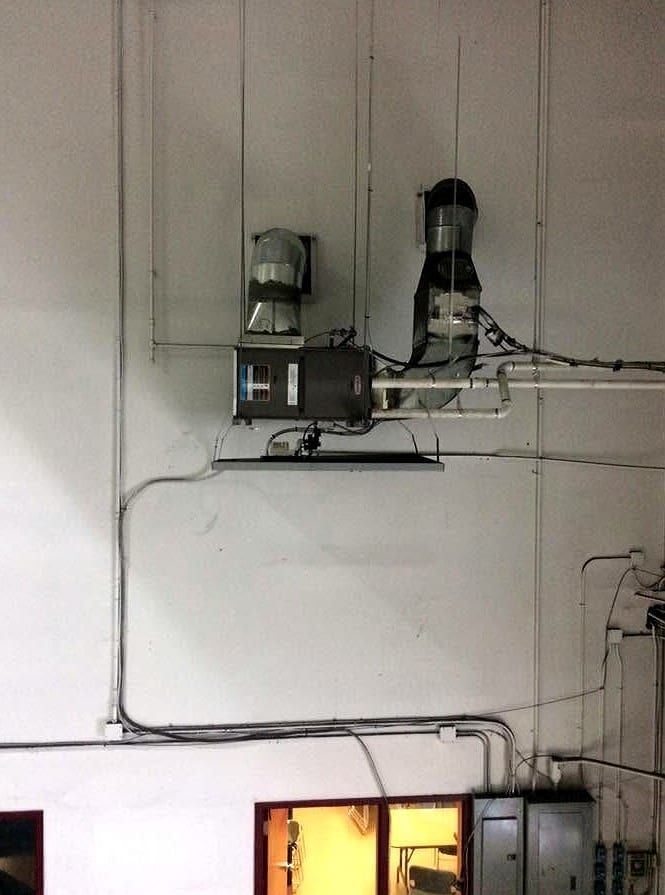
Shops, garages and warehouses are often heated by a gas unit heater hung from the ceiling, with its own vent and gas piping. It needs the same care as a home furnace: clean burners, a sound vent, a working flame sensor and a fan that moves the warm air down to where people work.
Cooling
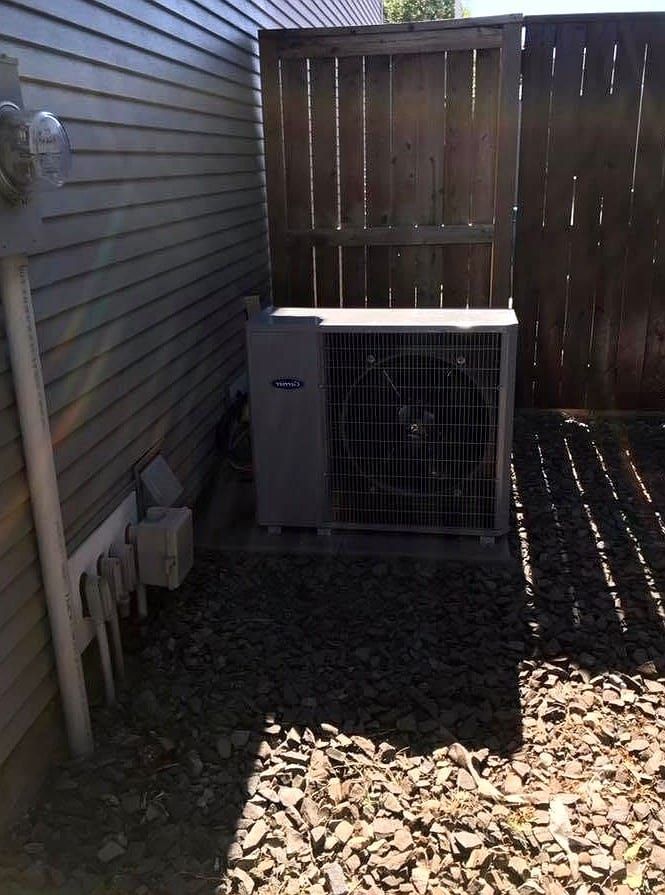
An outdoor condenser works best with open space around it, a level pad and nothing stacked against its coil. Set beside the house, close to its electrical disconnect, it should have room on every side for air to move and for a technician to reach the panels.
Have a job like one of these? Send a description and a photo or two.